Beekeeping approach
My goal is not to do as little as possible. My goal is to keep bees with the bees: observe, support, create good conditions and then intervene when an unfavourable development needs to be slowed.
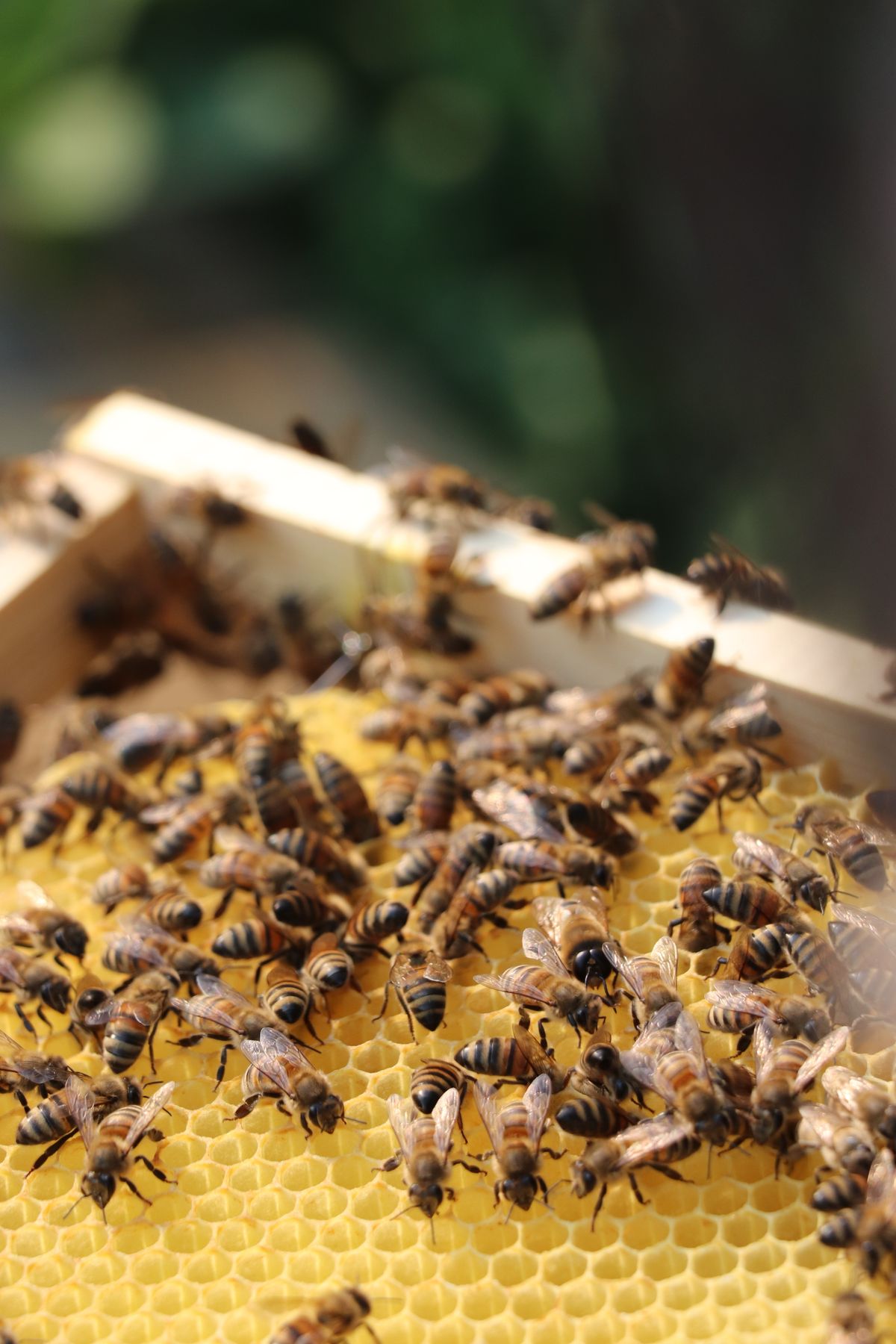
Working with the bees
Support the colonies, create good conditions and intervene when a development would harm the colony.
Interventions for a reason
Do not work by rigid routine; observe and decide what makes sense for each colony at that moment.
The colonies stay here
My colonies remain at their sites in Ingelheim all year and are not transported to different nectar flows.
Two honey harvests
The first harvest is around the end of the oilseed rape bloom, the second more often after the linden blossom. Anything collected afterwards remains with the bees as winter stores.
Why I question routines
I initially did a great deal by the textbook myself and adopted conventional procedures. Only over time did I experience that some long-established measures may solve a problem in the short term but can create new difficulties later. That was the point when I began to ask not only “What?”, but increasingly “Why?” and “What happens afterwards?”.
For me, that does not mean rejecting every proven method. Many things have good reasons behind them. But a measure should suit this colony, at this time and in this situation. Routine alone is not sufficient reason for me.
What “beekeeping with the bees” means to me
The bees should have the best possible conditions to function as a colony. I see my role as supporting those conditions and looking closely. If something develops unfavourably, I intervene, slow the situation or counteract it. If a colony is stable, it does not automatically need additional intervention.
This is not a matter of simply letting things happen. Especially during swarm season or when health problems arise, checks and measures are necessary. The difference for me is that an intervention has a specific purpose and does not happen merely because it has always been done at that time.
The colonies stay in Ingelheim
My colonies remain at their sites in Ingelheim all year. I do not transport them to other regions for individual blooms. They work with what flowers around their locations throughout the year. This produces different harvests in spring and early summer from the same local environment.
Harvesting honey twice
I harvest honey twice a year. The first harvest is around the end of the oilseed rape bloom, the second more often after the linden blossom. The exact timing depends on vegetation, nectar flow and the ripeness of the honey. After that, I do not take another summer or late-season harvest for sale: anything the colonies bring in afterwards remains with them as winter stores.
After extraction, the harvested honey is bottled directly into jars, labelled and made ready for sale. I do not buy in honey and I do not mix my harvests with honey of other origins. You can find the honey currently available under Buy honey.
Not finished, but still learning
My approach is not a rigid counter-model to conventional beekeeping. It has developed from my experience and is allowed to keep changing. If observations or new findings show that something can be done better, I adapt it. The key question for me remains: what actually helps this colony now?